Want to remember new words—or new ideas—faster and more completely? Your hands are the key to memory.
A study published in Current Biology (Mayer et al., 2015) found that people who used gestures while learning a new language remembered vocabulary far better than those who only listened or watched. The researchers taught participants a made-up language called Vimmish—chosen so that no one had heard it before—and compared recall among different groups. Some simply listened to the new words, others watched images, and others used gestures as they learned.
The result was unambiguous: learners who used their hands remembered the most. When participants gestured as they spoke, they activated the brain’s motor system—the same network that plans and executes movement—and their memory improved significantly. In fact, gesture proved even more powerful than pictures for helping words stick.
This research underscores something that great actors, ancient orators, and master teachers have long known: we learn through movement and gesture. The body isn’t just a vehicle for delivering ideas—it’s a powerful part of how we create and retain them.
Actors, for instance, don’t memorize their lines in a vacuum. They learn them in motion—tying words to actions, emotions, and places on stage. The process, known as blocking, anchors the script in physical space. When they move to a specific spot, or gesture in a certain way at another actor, the movement triggers memory: the next line comes naturally. That’s not coincidence—it’s neurology. The brain’s spatial and motor centers reinforce learning through association.
The ancient Greeks understood this too. To remember long speeches or complex arguments, they invented the memory palace: a technique of mentally walking through a familiar building—a home or temple—and associating each part of the speech with a specific room or object. When delivering the speech, the orator would simply “walk” through their imaginary palace, retrieving ideas in sequence as if plucking them from the shelves of memory.
Modern neuroscience now confirms what these ancient and artistic traditions intuited: that our brains are wired to remember movement, emotion, and space. We don’t store memories as static text files—we encode them as experiences, involving multiple senses. The more senses we engage, the stronger and more durable the memory becomes.
For public speakers, this has profound implications. Research during the pandemic found that audiences understand what’s being said up to 30% better when they can see the speaker gesturing. That’s because gestures add a visual and kinesthetic dimension to language—they make abstract ideas concrete, and rhythm and emotion visible.
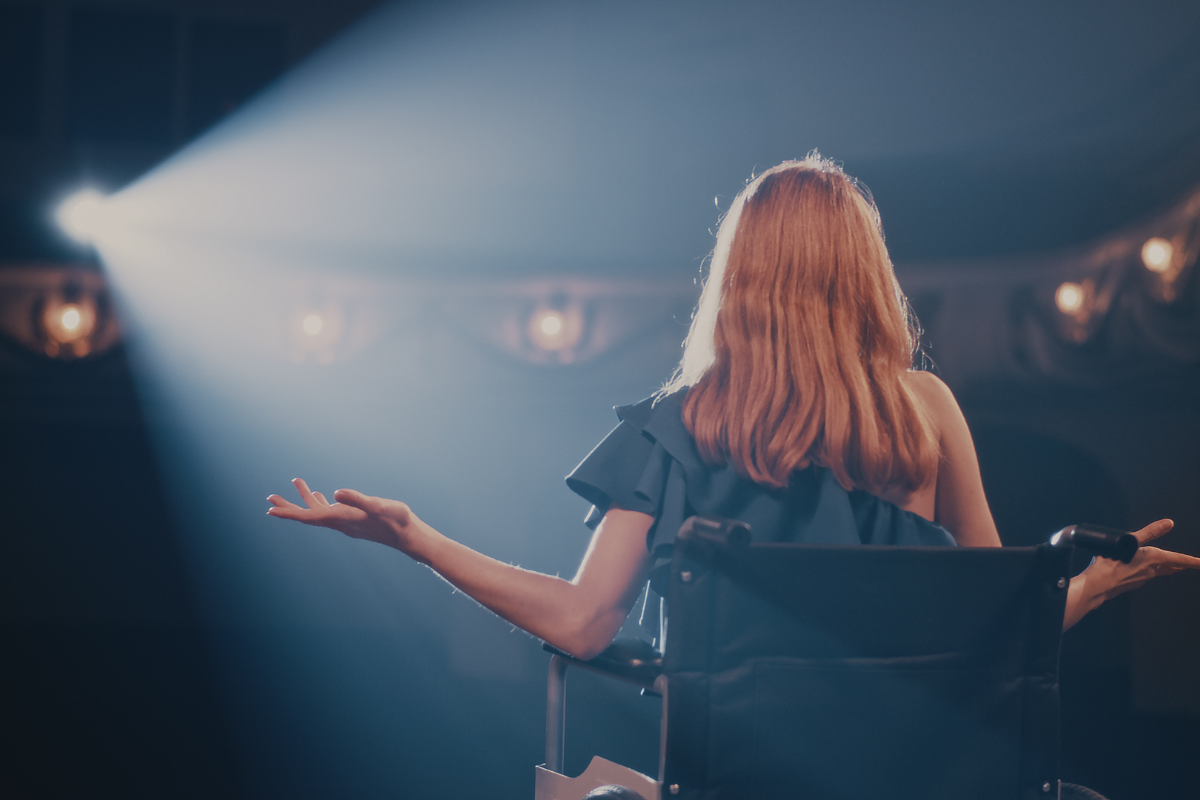
So when you step on stage, don’t just think about what to say—think about how to move. Let your hands illustrate your points. Anchor your transitions with steps across the stage. Let your gestures breathe meaning into your words. And whenever possible, invite your audience to move too: raise hands, mirror a motion, or write something down. The more physically involved they are, the more deeply your message will land.
In all these ways—whether through the sweep of an actor’s arm, the imagined corridors of a Greek orator’s palace, or the expressive gestures of a modern speaker—movement turns language into memory.
So go ahead: bring on the gestures. Your body isn’t a distraction from your message. It is the message—made visible, memorable, and alive.